Member Exclusive Preview

- #Digital
- #Supply Chain
- #Whitepaper
Digital Supply Chain Resilience: How Companies Can Meet the Supply Chain Challenges of an Increasingly Turbulent and Challenging World
Developed in collaboration with GeSI’s global Supply Chain Working Group and leading technology companies, the publication explores how digital technologies, trusted data ecosystems, and cross-sector collaboration can help organizations strengthen supply chain resilience while advancing sustainability and long-term competitiveness.


- #Climate
- #ICT
Digital Solutions for Climate Action: Using ICT to Raise Ambition on Climate Action in Low and Medium Income Countries
The 2020 report highlights how digital technologies can significantly reduce greenhouse gas emissions and drive climate adaptation by 2030, with a focus on seven countries: Brazil, Chile, China, India, Kenya, South Africa, and Vietnam.

- #Circularity
Comparison of Circulytics & Circular Transition Indicators
This paper analyses the similarities, differences and potential uses of two salient company-level CE indicator frameworks — Circulytics 2.0 from the Ellen MacArthur Foundation and the Circular Transition Indicators V1.0 from the World Business Council for Sustainable Development.

- #Climate
Climate Scenario Framework Analysis (TCFD)
This Framework is designed for the ICT sector, and beyond, conduct climate scenario analyses in line with best practices. Aligned with the Task Force on Climate-related Financial Disclosures (TCFD), the recommendations help understand the financial impact of climate change on their bottom-line.



- #SMART Series
SMARTer 2020: The Role of ICT in Driving a Sustainable Future
The SMARTer 2020: The Role of ICT in Driving a Sustainable Future report reveals how information and communications technology (ICT) can be a powerful driver of sustainability, showing its potential to cut global emissions by up to 15%—equivalent to 7.8 gigatonnes of CO2. By offering a roadmap for energy efficiency across sectors like manufacturing, transportation, and buildings, the report highlights actionable strategies and case studies that demonstrate ICT’s transformative impact on the path to a low-carbon future.
- #SMART Series
SMART Portugal 2020: Reducing Emissions and Increasing Energy Efficiency through ICT
This iteration of the SMART series reveals how innovative ICT solutions can powerfully reduce emissions and boost energy efficiency across sectors, offering actionable insights, urging industry and policymakers alike to leverage digital tools for impactful climate action.

- #ICT
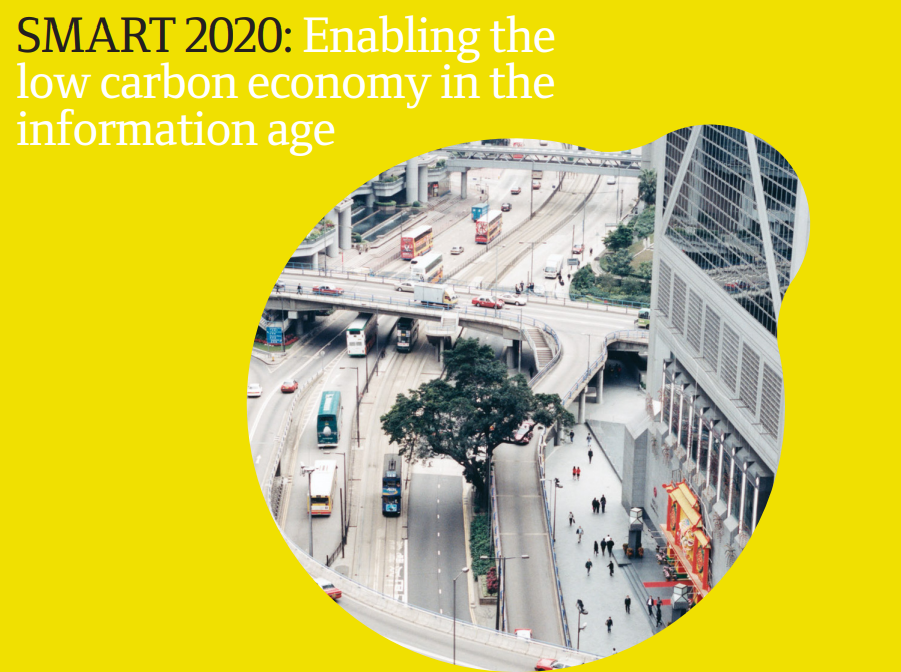
Evaluating the Carbon-Reducing Impacts of ICT – An Assessment Methodology
This framework is designed to assess and quantify the carbon-reducing potential of ICT products and services, providing businesses and industries with a clear method to measure the environmental impact of their ICT-enabled solutions.

- #Materiality
Materiality Assessment – Review and Alignment with the Sustainable Development Goals
This comprehensive review reflects key industry issues like data security, privacy, and climate change, while introducing emerging focus areas such as disruptive forces and the social impact of ICT products and services.



- #Carbon Accounting
Mobile Carbon Impact: How Mobile Communications Technology is Enabling Carbon Emissions Reduction
GeSI commissioned the Carbon Trust to complete the first ever bottom-up quantification of the significant areas of carbon emissions abatement enabled by mobile communications technology across the USA and Europe.



- #Human Rights
GeSI Good Practice Guide: Embedding Privacy and Wider Human Rights into New Product and Service Development
The GeSI Good Practice Guide offers ICT companies a structured approach to embedding privacy and human rights into new product and service development. Drawing insights from industry leaders like BT, Ericsson, and Microsoft, it outlines five essential steps to ensure companies stay aligned with human rights principles and continuously improve their practices amidst evolving stakeholder expectations.

- #Human Rights
GeSI Good Practice Guide: Responding to UNGP’s Expectations to Remedy Human Rights Impacts
The guide offers a clear path for ICT companies to navigate the complex responsibilities of remedying human rights impacts, as outlined by the UN Guiding Principles on Business and Human Rights. It also provides valuable insights and examples, empowering businesses to address both direct and supply chain-related human rights violations effectively.


- #Climate
- #ICT
Resilient Pathways: The Adaptation of the ICT Sector to Climate Change
The objectives of this report are to explore the impacts of climate change on the information and communication technology (ICT) sector and the potential for adaptation, including the need for new standards to be developed.

- #ICT
Measuring the Energy Reduction of Selected Broadband-Enabled Activities within Households
GeSI conducted a study in collaboration with Yankee Group and the American Council for an Energy-Efficient Economy (ACEEE) to explore how broadband and ICT technologies could help reduce global greenhouse gas emissions and enhance sustainability in households.



- #Circularity
Coltan Mining: How Tantalum-Using Industries can Commit to the Reconstruction of the DRC
Tantalum, a crucial metal in electronics, aerospace, and medicine, became a source of conflict and environmental devastation after a surge in demand in the early 2000s. The illegal mining of coltan in the Democratic Republic of Congo fueled violence, destroyed ecosystems, and violated human rights, prompting the UN to seek sustainable solutions for the industry.