Public Resources

- /Show all
- /Artificial Intelligence (AI)
- /Biodiversity
- /Circularity
- /Climate
- /DEFIA
- /Digital
- /Digital Infrastracture
- /Digital With Purpose
- /Education
- /European Green Digital Coalition (EGDC)
- /Human Rights
- /ICT
- /Member Spotlight
- /Report
- /Scope 3
- /Smart City
- /Sustainable Development Goals (SDGs)
- /Thought Leadership
- /Tool
- /United Nations
- #DEFIA
- #Education
- #Thought Leadership
DEFIA Statement: A joint responsibility to ensure sound use of chatbots in education
The task is to shape chatbot use so that it supports understanding, critical judgment, learner autonomy and responsible participation in society. The statement was developed through the Digital Education for Impact Alliance (GeSI’s DEFIA), co-founded by GeSI, the University of Coimbra in Portugal and Huanghe Science and Technology University in China.
- #DEFIA
- #Education
- #Thought Leadership
DEFIA Statement of Intent: Human-Centric Artificial Intelligence and Artificial General Intelligence
GeSI is pleased to share the release of a new Statement of Intent from the Digital Education for Impact Alliance (DEFIA), calling for stronger human-centric boundaries for Artificial Intelligence (AI) and Artificial General Intelligence (AGI).


- #European Green Digital Coalition (EGDC)
- #Member Spotlight
NEC: Turning Precision Agriculture into Measurable Climate Impact
Colt’s Smart Building project, launched in 2023 in partnership with Nuuka, applies Artificial Intelligence and Machine Learning across the building’s HVAC system to optimise performance based on real-world usage.

- #Climate
- #Report
PwC’s Third Annual State of Decarbonization Report Highlights the Strengthening Business Case for Climate Action
New insights from GeSI member PwC show how companies are moving from climate ambition to disciplined execution, linking decarbonization with resilience, growth and measurable business value.


- #European Green Digital Coalition (EGDC)
- #Member Spotlight
Smart Building project by Colt (EGDC)
Colt’s Smart Building project, launched in 2023 in partnership with Nuuka, applies Artificial Intelligence and Machine Learning across the building’s HVAC system to optimise performance based on real-world usage.


- #Member Spotlight
- #Tool
Green Light by Google
Google’s Project Green Light uses AI and Google Maps data to optimise traffic signals, reducing stop-and-go traffic. Already deployed in 20+ cities globally, the solution has achieved up to 30% fewer stops and 10% lower emissions, demonstrating scalable digital impact in urban mobility.


- #Member Spotlight
LONGi: Bringing new technologies in the photovolataic industry
As the global energy transition accelerates, the photovoltaic industry faces a defining challenge: how to scale advanced, high-efficiency solar manufacturing without compromising net-zero production, operational safety, or long-term reliability. This is the challenge LONGi addresses.

- #Member Spotlight
Globant: Unlocking the Value of Circular Water Through Science, Digital Innovation & Cross-Industry Collaboration
Globant brought together its AI-powered Sustainable Business Studio with Xylem’s deep water-technology expertise—forming a cross-industry partnership capable of capturing the full operational, environmental, and financial dimensions of circularity.


- #Artificial Intelligence (AI)
- #Digital Infrastracture
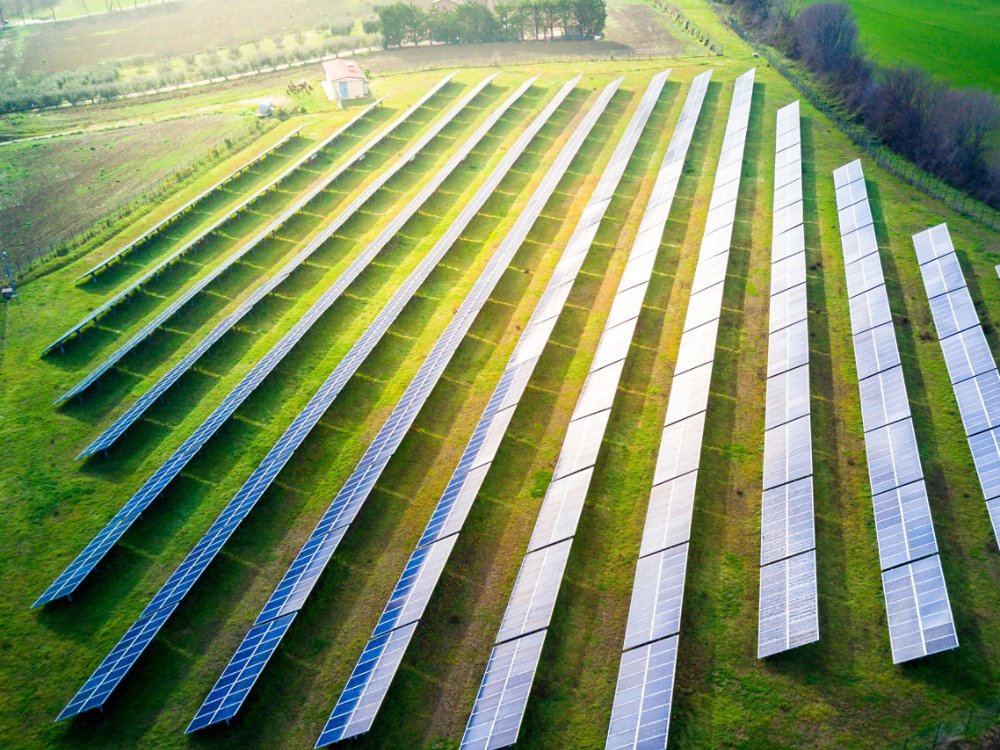
Digital Infrastructure Modernization for an AI Future
As AI continues to evolve, its impact on energy infrastructure will be profound, creating both challenges and opportunities. GeSI’s paper is an essential read for anyone interested in understanding how we can shape a sustainable, AI-driven future.


- #Scope 3
Scope 3 Guidance for Telecommunication Operators
The Scope 3 Guidance for Telecommunication Operators serves as a vital resource for ICT companies looking to address greenhouse gas (GHG) emissions throughout their value chains. Specifically focused on Scope 3 emissions, this guidance helps companies measure, report, and reduce emissions that are indirectly linked to their operations, such as those from suppliers and customer usage.



- #ICT
ICT Guidance on GHG Protocol Product Life Cycle Accounting and Reporting Standard
GeSI’s ICT Sector Guidance, produced in collaboration with Carbon Trust provides guidance and accounting methods for the calculation of GHG (greenhouse gas) emissions for ICT (Information and Communication Technology) products with a focus on ICT services.



- #ICT
Guidance on Setting Science Based Targets (SBTs) for ICT Companies
This document supports information and communication technology (ICTs) companies in setting science based targets for greenhouse gases (GHGs) according to a set of new decarbonisation pathways, described in detail in Recommendation ITU-T L.1470 ‘GHG emissions trajectories for the ICT sector compatible with the UNFCCC Paris Agreement’ and aligned to the IPCC Special Report on 1.5°C and developed to be used as a sectoral target-setting approach by the Science Based Targets Initiative (SBTi).

- #Human Rights
Enabling Rights: The Transformative Potential of Digital to Enable People’s Rights
Enabling Rights explores the transformative potential of ICTs to protect and promote human rights across various sectors. It presents ICT as a powerful tool that can aid a wide range of stakeholders, in identifying, preventing, and addressing human rights violations.
- #Sustainable Development Goals (SDGs)
System Transformation: How Digital Solutions Will Drive Progress Towards The Sustainable Development goals (SDGs)
GeSI’s 2015 research highlights how digital solutions can bridge the global gaps in achieving the UN Sustainable Development Goals (SDGs), showcasing the transformative power of technology across all 17 goals.